Risk Modelling
Models are needed to predict the current and future risks from mosquitoes and associated diseases under environmental changes.
These models must be underpinned by high-quality real-world data that connect vectors, pathogens, and their environment, such that predictions are well-informed and account for environmental complexities. This work package will combine data from the previous objectives, alongside additional high-frequency field sampling to assess mosquito population trends with land use.
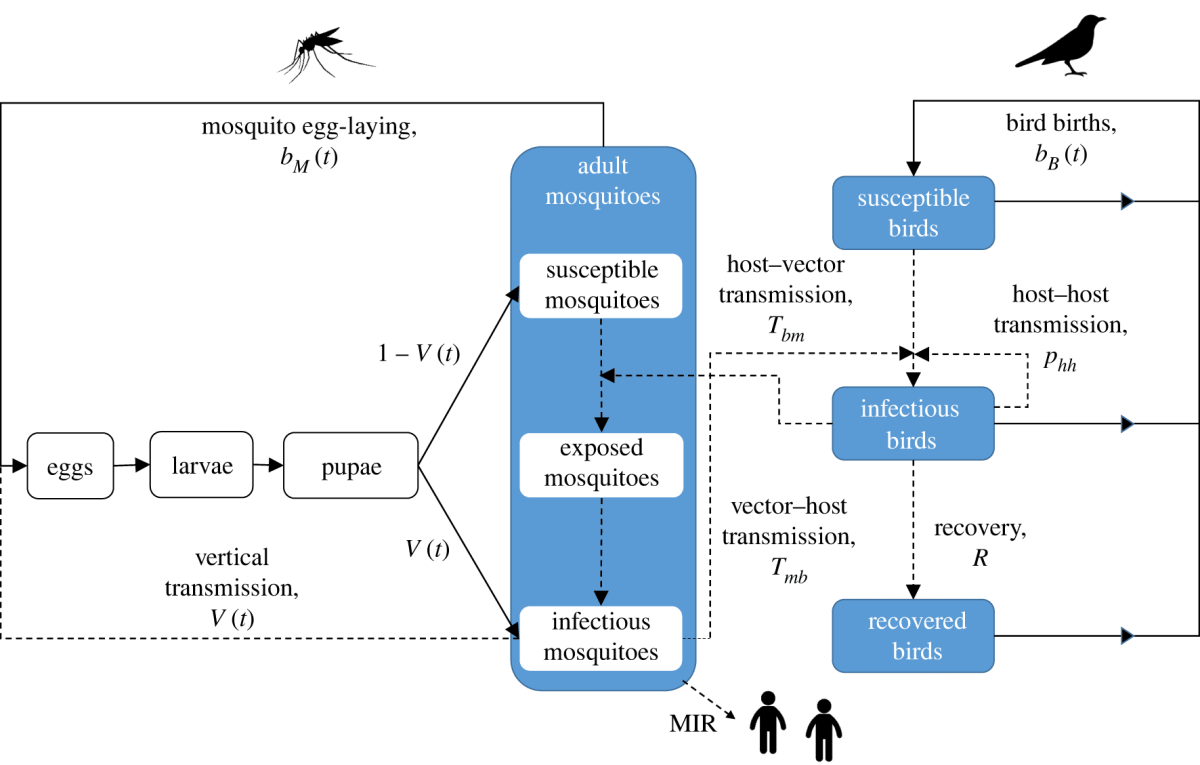
Models will incorporate climate data, such as natural-rural-urban temperature profiles, to assess mosquito population trends and their potential pathogen risks, including from West Nile, Usutu, and Sindbis viruses. This approach will thereby combine and compare local data with known global relationships among mosquitoes, associated pathogens, and environmental profiles. This part of the project will assess how future mosquito-borne disease risk will be shaped by both climate and land use changes, both locally and globally.